
On this page
- What is different about commercial gutters
- Common commercial systems
- How commercial work is done
- Licensing for commercial work
- Stormwater on commercial sites
- Problems we hear about most
- What to ask
- Commercial building types around Gresham
- Planning work on occupied buildings
- Maintenance contracts
- Stormwater on commercial and multi-family sites
- Weather on big roofs
What is different about commercial gutters
A house roof sheds a few thousand square feet of water. A strip mall, a church or an apartment building can shed many times that into a single gutter line. Everything scales up: wider gutters, thicker metal, bigger downspouts, more outlets, stronger hangers and more care with where the water ends up.
The same applies to apartment buildings. Single-family detached homes make up only about half of Gresham's housing units, so a large share of local roofs belong to apartments, townhouses and commercial buildings.
Common commercial systems
| System | Where it is used |
|---|---|
| 6-inch and larger K-style | Apartments, offices, small retail |
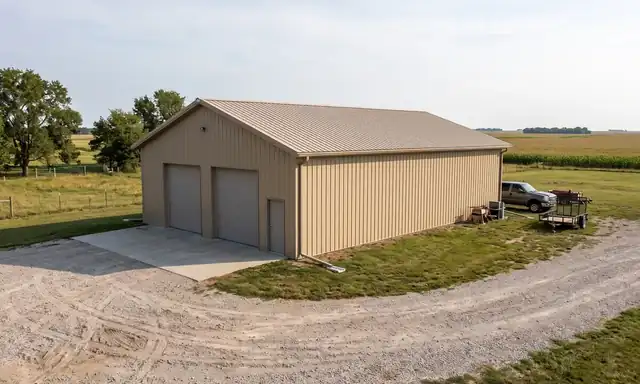
| Box gutters | Metal buildings, warehouses, long low roofs |
| Built-in or parapet gutters | Older masonry buildings with flat roofs |
| Scuppers and conductor heads | Flat roofs draining through a parapet wall |
| Large downspouts (4-inch and up) | Anywhere the roof area is large |
How commercial work is done
- Site visit and roof survey. Measure gutter runs and roof areas, identify the drainage path at ground level, note access and safety needs.
- Sizing. Gutters and downspouts sized for the roof area and slope draining to each outlet.
- Material and gauge. Heavier aluminum or steel, sometimes custom-formed box sections.
- Scheduling. Work planned around business hours, tenants, parking and deliveries.
- Installation or repair. Done to the drawings, with sealed joints and expansion joints on long runs.
- Testing. Water run through, and outlets checked at ground level.
Licensing for commercial work
Oregon's Construction Contractors Board licenses residential and commercial work separately. Among the violations the CCB investigates is working without the proper endorsement, such as a residential contractor on a commercial project. Before hiring, look the contractor up on the CCB license search and confirm a commercial endorsement.
Ask for proof of liability insurance naming your company or property manager, and confirm how they will handle safety on a roof or lift.
Stormwater on commercial sites
Gresham's stormwater management manual applies to both private and public projects, and generally expects stormwater from new impervious area to be managed on the same property. Commercial sites often drain roofs into private storm lines, drywells, swales or planters. If a repair or replacement changes where roof water goes, check whether city review is needed. The city's manual notes that a drywell counts as an underground injection control under Oregon DEQ's definition, so drywells carry their own requirements.
Problems we hear about most
- Overflow at one corner every storm. Often a single undersized outlet serving too much roof.
- Leaking expansion joints on long runs, where the gutter moves with temperature.
- Rusted or separated box gutters on older metal buildings.
- Clogged downspouts under parking-lot trees.
- Downspouts discharging onto walkways, which ice over when the east wind brings freezing weather.
What to ask
- What is your CCB license number and does it carry a commercial endorsement?
- How did you size the gutters and downspouts?
- How will you handle access, tenants and safety?
- What is the warranty on workmanship?
- Will you provide a written contract and certificate of insurance?
Commercial building types around Gresham
| Building | Typical gutter needs |
|---|---|
| Garden-style apartments and townhouse complexes | Many runs of 5-inch or 6-inch K-style, downspouts at entries, regular cleaning contracts |
| Strip retail and offices | 6-inch or larger, downspouts away from walks and parking |
| Churches and schools | Large roofs, tall eaves, lift access, sometimes copper or half-round on older buildings |
| Metal warehouses and shops | Box gutters, large downspouts, expansion joints |
| Older masonry buildings | Built-in gutters, scuppers and conductor heads |
| Agricultural and nursery buildings near Boring and Damascus | Large simple roofs, water to tanks or ponds |
Planning work on occupied buildings
Most commercial gutter work happens around tenants, customers and staff. A good contractor will plan:
- Access. Lifts or scaffolds, parking closures and sidewalk protection.
- Timing. Early starts, weekends or phased work by building.
- Notices. Written notice to tenants about cars, patio items and noise.
- Safety. Fall protection on roofs and lifts, and a plan for overhead work near entrances.
- Documentation. Before and after photos, a list of repairs by building, and a certificate of insurance.
Maintenance contracts
For apartment complexes and commercial sites, a cleaning and inspection contract is often cheaper than emergency repairs. A typical contract covers two cleanings a year, downspout flushing, minor resealing and a written condition report. Under heavy trees, the contract may include a third visit after leaf drop or a major storm.
Stormwater on commercial and multi-family sites
Commercial and multi-family roofs often drain into private storm systems: pipes, catch basins, swales, planters or drywells. Gresham's manual notes that stormwater from anything other than a single detached house roof must be registered with DEQ when it goes into a drywell. Gutter work that changes where roof water goes may need review. In Portland, Environmental Services handles private property drainage questions; its downspout guidance covers when disconnection is safe.
Weather on big roofs
Large flat and low-slope roofs collect a lot of water during the long winter rains, when nearly 90 percent of the year's rain falls. Scuppers, internal drains and gutters on these buildings need clearing before the season. East wind gusts can lift loose gutter sections and flashing on tall, exposed buildings, and freezing rain can ice over walkways below downspouts. Plan downspout discharge away from entrances and parking aisles.