
On this page
Sandy at a glance
| County | Clackamas |
| Incorporated | 11 August 1911 |
| People and homes | 12,612 residents and 4,697 housing units at the 2020 census |
| Elevation | Roughly 1,000 feet |
| Rain | About 61 inches a year |
| Water | The Sandy River below the town |
| Biggest gutter risks | Heavy rain, needles, moss, overflow on long eaves |
On the road to the mountain
Sandy began as a settlement around the Revenue family, who arrived about 1853, near the route of the Barlow Road. It was first called Revenue, then renamed for the Sandy River, which Lewis and Clark named in 1805. The town incorporated in 1911, and in October 1913 a fire destroyed many of the buildings on the south side of Main Street. Its oldest surviving landmarks include the 1923 brick Pioneer Building, once Sandy Union High School. Today Sandy is the western gateway to the Mount Hood corridor, about 27 miles east of Portland.
Rain
Sandy is much wetter than Gresham. Wikipedia gives an average of 61.4 inches a year, and KPTV's summary of PRISM data says Sandy and the other Cascade foothill towns get 55 to 65 inches in an average year, close to double the airport. Gutters here carry a lot of water for months on end.
The river
In the February 1996 flood, the Sandy River near Sandy crested at 22.6 feet, above its 1964 record. Most of the town sits well above the river. Gutters do nothing about river floods. They do keep roof water from saturating the ground around the foundation.
What it means for gutters
| Local condition | What to do |
|---|---|
| 55 to 65 inches of rain | Consider 6-inch gutters on large roofs; add outlets on long runs |
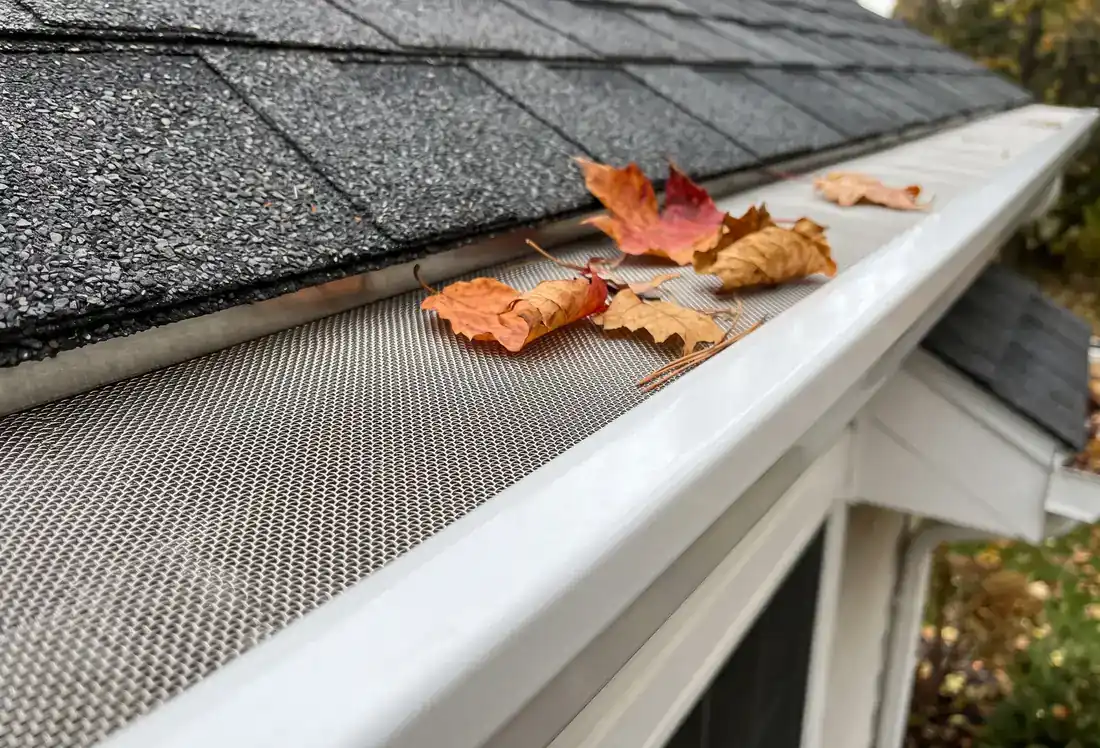
| Tall firs and cedars | Fine mesh guards and 3x4 downspouts |
| Shaded, wet roofs | Deal with moss; trim branches to let sun in |
| Hillside lots | Route downspouts so water does not run toward the house or a neighbor |
| Long wet season | Clean in late fall and late spring, more under heavy trees |
Moss and needles
Wet, shaded roofs under conifers are where moss does best. Oregon State University's Extension Service says moss on Northwest roofs is inevitable, and that the only lasting fix is more sun. In Sandy, many roofs never get much. That makes regular gutter cleaning, a good guard, and gentle moss removal more important here than in town.
Housing
Larger two-story homes with complex roofs often have valleys that pour into short runs of gutter, which is where 6-inch gutters earn their keep in Sandy's rain. Older homes are more likely to need fascia work when the gutters come down.
Local rules
Sandy is in Clackamas County and has its own city stormwater rules. Ask a contractor who works there regularly, and check any contractor's CCB license.
Snow and the mountain road
Sandy sits several hundred feet higher than Gresham and closer to the Cascades, so snow is more likely to stay on its roofs. Snow sliding off a steep roof can catch the front lip of a gutter and pull it down, especially on metal roofing. Snow guards on the roof, hangers set close together and gutters set tight under the drip edge all help.
Before you call
Count the downspouts on the house and note which ones overflow first in heavy rain. In Sandy, the answer often points straight at an outlet packed with needles or a run that is too long for one downspout.
Sandy landmarks
Sandy's Main Street is the start of the Mount Hood corridor on U.S. Highway 26. The 1923 brick Pioneer Building, once Sandy Union High School, and St. Michael's Catholic Church are among its older landmarks, and Meinig Memorial Park is the city's largest park, according to Wikipedia. The Sandy River runs below the town to the west.
House types and gutters in Sandy
| Type | Gutter notes |
|---|---|
| Older homes near Main Street | Fascia and trim; buried drains |
| Newer subdivisions | Large roofs, valleys, 6-inch sections |
| Rural and acreage homes outside town | Shops, barns, wells, septic |
| Homes under tall firs | Mesh guards; 3x4 downspouts |
Local rules
Sandy is in Clackamas County and sets its own stormwater and tree rules, separate from Gresham's and Portland's. Ask a contractor who works there regularly, or the city's public works or planning office, before changing where roof water goes. Any contractor repairing or installing gutters needs an Oregon CCB license.