
On this page
The types
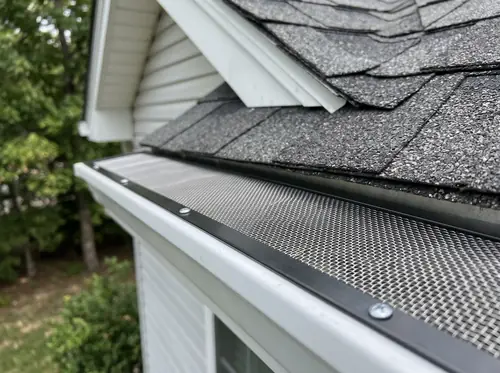
Screens. A metal or plastic grid laid over the gutter. Cheap and easy to fit. Openings are large.
Perforated covers. A solid aluminum sheet punched with holes or slots. Stiffer than a screen.
Reverse-curve (surface-tension) covers. A solid hood that curves over the front of the gutter. Water clings to the curve and drops into a slot. Leaves slide off.
Foam and brush inserts. Material stuffed into the gutter that lets water through and blocks larger debris.
Where they work and where they do not
| Type | Under leaves (maple, oak) | Under needles (fir, cedar, pine) | Cost |
|---|---|---|---|
| Screen | Good | Poor: needles fall through and lodge | Low |
| Perforated cover | Good | Fair to poor | Low to medium |
| Reverse-curve | Good | Fair: needles collect in the slot | Medium to high |
| Foam or brush | Fair | Poor: traps needles, stays wet | Low |
| Micro-mesh | Good | Good | Medium to high |
Most east county lots have at least some conifers, so many homeowners end up with micro-mesh. On an open lot with only a street maple, a screen or perforated cover can be all you need.
Long rains and reverse-curve covers
Reverse-curve covers depend on water following the curve. In long, steady rain at moderate intensity, they do well. On steep roofs and in hard downpours, water moving fast can run past the curve. In Gresham, where nearly 90 percent of the year's rain falls between mid-October and mid-May, they also face months of debris and moss washing over the front edge. Check the slot each fall.
Foam and moss
Foam inserts sit inside the gutter and stay damp. In a climate where Oregon State calls roof moss inevitable, a permanently wet strip of foam full of needles is an ideal place for moss to grow. They are better avoided here.
Fitting
Whatever the type:
- Clean the gutters and flush the downspouts.
- Fix leaks, sag and pitch first.
- Fasten the guard so the east wind cannot lift it.
- Water test from the roof.
Matching the guard to the lot
Walk around the house and look up. Note every tree within reach of the roof, and which ones are conifers. Then look at the gutters in late fall:
- Mostly broad leaves sitting on top or in the trough: a screen or perforated cover will usually do.
- Mostly needles packed in the trough and the outlets: go fine mesh.
- A mix, with moss on the roof: fine mesh, plus dealing with the moss.
Newer subdivisions with young street trees often fall in the first group for years, until the trees grow. Older lots near the buttes and creeks usually fall in the second or third.
Wind
East wind gusts out of the Columbia River Gorge can lift guards that are only clipped in. Whatever type you choose, ask for it to be screwed to the gutter. Lightweight plastic screens are the most likely to blow out.
What to ask
- What trees are over my roof, and which guard suits them?
- How is it fastened?
- What maintenance should I expect?
- What does the warranty cover?
See gutter guards and are gutter guards worth it.
Snap-in screens on rentals
Snap-in plastic or metal screens are popular on rentals and budget jobs because they are cheap and quick. They can help on single-story houses under broad-leaf trees. Under conifers, they tend to collect a mat of needles on top and lodge needles in the openings, and in the east wind they can pop out. If you use them, check them every fall.
Reverse-curve hoods and long rains
Reverse-curve hoods rely on water following a curved nose into a slot. In moderate, steady rain, the kind that makes up most of the east county winter, they work well on clean roofs. Problems come with heavy debris washing over the nose and collecting in the slot, and on steep roofs where water moves fast enough to jump the curve.