
On this page
What fascia and soffit are
The fascia is the board that runs along the edge of the roof, under the drip edge. Gutters hang from it. The soffit is the underside of the roof overhang, between the fascia and the wall. Together they close off the roof edge from weather, birds and rodents.
How they rot
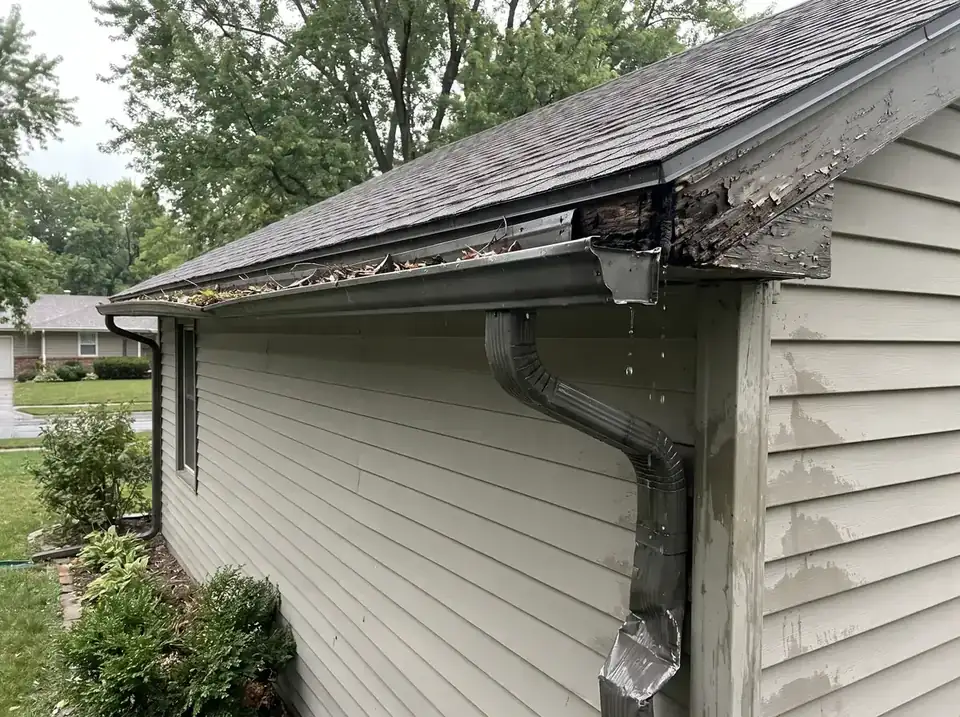
Wood rots when it stays wet. Behind a gutter, that happens when:
- The gutter leaks at a corner or seam, dripping onto the board
- The gutter overflows at the back because it is clogged or sagging
- There is no drip edge, so water runs behind the gutter
- Moss and debris pile against the board and hold moisture
- Paint has failed and the end grain is exposed
In Gresham's climate, wet wood has a long season to rot. Rain falls on most days from fall through spring, and nearly 90 percent of the year's total falls between mid-October and mid-May. A small leak left for a few winters can soften a board right through.
Age matters
Much of Gresham's housing dates from 1970 to 1999, with a large share from 1940 to 1969. Original fascia boards on those houses have had decades of exposure. Many have been repainted over soft spots. It is common to find rot only once an old gutter comes down.
How repairs are done
- Take the gutter down along the affected run.
- Probe the boards and cut back to sound wood.
- Check the rafter tails and roof deck behind. If they are soft, the repair is bigger.
- Fit new fascia, primed on all sides and ends, or a rot-proof composite.
- Repair soffit panels and vents as needed.
- Check the drip edge, and add or extend it so water goes into the gutter.
- Paint or leave for painting, as agreed.
- Rehang or replace the gutter on hidden hangers.
Repair now, or wait for new gutters?
If the gutters are due for replacement anyway, fix the fascia at the same time. If the gutters are sound but one stretch of fascia has gone, a contractor can take down that run, replace the board and rehang the same gutter.
Pests
Gaps in soffit and fascia let in birds, squirrels and rats. If you hear scratching in the eaves, a damaged soffit is a likely way in. Repairing the wood and screening the vents closes it.
Signs you can check from the ground
- Paint peeling or blistering along the board behind the gutter
- Dark streaks running down the fascia or the siding below
- A wavy line where the gutter meets the roof
- Gaps between the gutter and the board
- Green growth on the board
- Daylight or nesting material showing through the soffit
If you can safely reach the board from a ladder, press it gently with a screwdriver. Sound wood resists. Soft wood gives.
What to ask
- How much rot is there, and how far does it go?
- Is fascia repair priced per foot, or included?
- What material will you use, and is painting included?
- Will you add or fix the drip edge?
- What is your CCB license number?
Fascia materials
| Material | Pros | Cons |
|---|---|---|
| Primed wood (fir or pine) | Matches older houses; easy to paint | Must be primed on all faces and kept painted |
| Cedar | Naturally rot-resistant | Costs more; still needs finish |
| Composite or PVC trim | Does not rot; holds paint | Different look; must be fastened correctly |
| Aluminum fascia wrap | Covers wood with metal | Can hide rot if wood is not repaired first |
Soffit types
Soffits under the eaves may be solid wood or plywood, vented panels, perforated vinyl or aluminum. Vents keep the attic ventilated; when replacing soffit, keep the vent area at least what it was. Blocked soffit vents can add to moisture problems in the attic.
Fascia age across the area
The City of Gresham's 2021 survey report counts more than 1,100 pre-1969 lots in Centennial and more than 1,500 in Rockwood, almost all from the 1950s and 1960s. Original fascia on those houses has been exposed to sixty or more wet winters. In Portland's east-side neighborhoods, much of the housing came in the same post-war boom. Expect some fascia repair whenever old gutters come down on these houses.