
On this page
Gresham Butte at a glance
| City | Gresham, southern edge |
| Terrain | Slopes of Gresham Butte, one of six buttes within city limits |
| Geology | Volcanic vents of the Boring Lava Field |
| Housing era | Mostly 1970 onward: 1,967 lots built from 1970 to 2020 |
| Green space | Gabbert Butte Nature Park and the Gresham Butte Saddle Trail |
| Biggest gutter risks | Needles, moss, steep lots, two-story downhill sides |
A neighborhood on an old volcano
Gresham Butte is one of the old vents of the Boring Lava Field, a scatter of small volcanoes active from about 2.7 million years ago. Metro's master plan for Gabbert Butte counts six buttes within Gresham city limits: Gresham, Gabbert, Hogan, Towle, Sunshine and East Bliss. The city's Gresham Butte Saddle Trail climbs over the saddle between Gresham Butte to the north and Gabbert to the south, through native forest of salal, sword fern and vine maple.
The City of Gresham's 2021 historic survey report notes that much of the neighborhood is still undeveloped, held in the Gabbert Butte Nature Park, and that development has been substantial since 1970: 1,967 lots were built from 1970 to 2020, against 99 before 1969.
Hillside houses
Building on a butte means split-levels, daylight basements and houses that are one story at the street and two or three at the back. For gutters that means:
- Tall downhill eaves, where cleaning and repairs need proper ladders or lifts
- Roofs shaded by firs, which grow moss and collect needles
- Downspouts that discharge onto slopes, where water can run toward the house below or undercut a wall
- Long runs on the uphill side that collect water from big roof planes
Soil and slope
Long weathering on the Boring Lava Field has turned the upper 5 to 15 feet of soil on many vents into a red, clay-like material. Clay drains slowly. Gresham's standard downspout extension detail is intended for well-draining soil of more than 2 inches per hour and slopes of 10 percent or less. Many lots on the butte do not meet that. If yours does not, a simple extension may not be the answer, and it is worth asking the city or a drainage contractor about alternatives. See downspouts, drywells and stormwater.
Firs, needles and moss
The butte's forest is the reason people live here, and also the reason gutters fill up. Oregon State University's Extension Service says moss on Northwest roofs is inevitable and that the lasting fix is more sun on the roof. On a forested slope that is not always possible, so plan on:
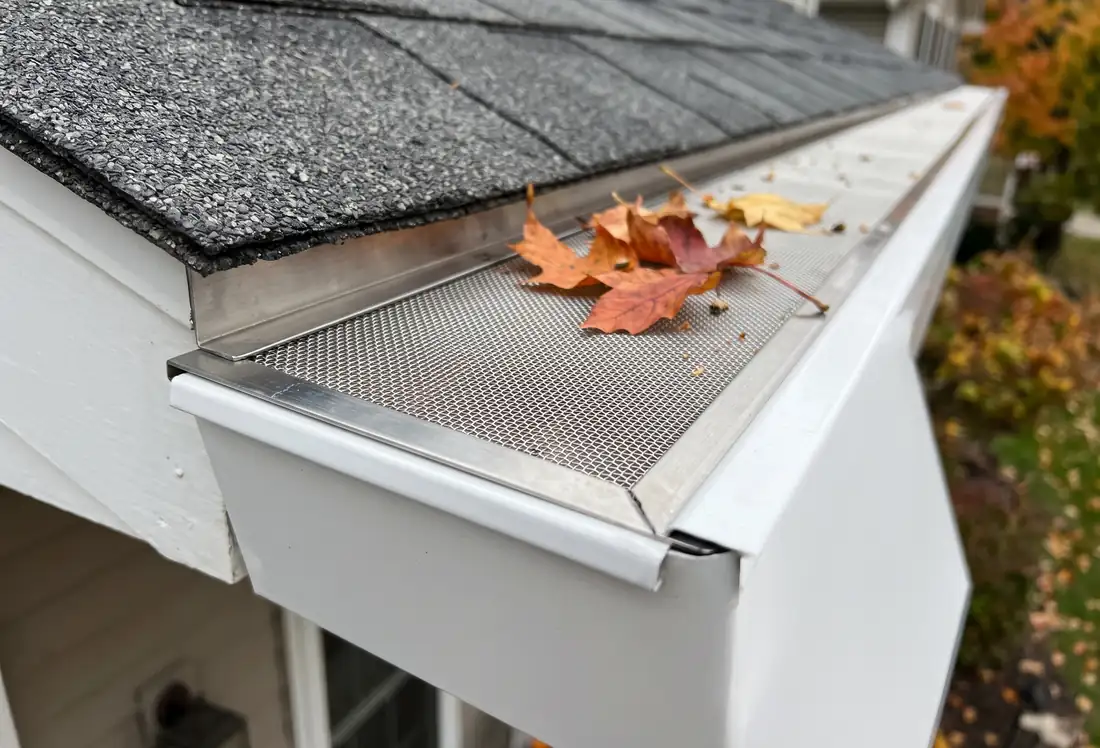
- Fine stainless micro-mesh guards
- 3x4-inch downspouts that do not jam with needles
- Cleaning in late fall and late spring
- Gentle moss removal, keeping zinc products away from any copper
Storms
Tall trees on slopes are exposed in ice storms and east wind. In January 2024, officials linked widespread tree falls across the region to saturated ground, ice on the canopy and unusually strong east winds. Check gutters after every major storm for bent runs and torn-off downspouts.
Before you call
Note how many stories the house is on its tallest side, how close the trees are, and where each downspout discharges. Those three facts decide most of the job.
Trails, buttes and nature parks
The neighborhood borders the city's buttes and natural areas. The Gresham Butte Saddle Trail climbs over the saddle between Gresham Butte and Gabbert Butte, and Metro's master plan describes Gabbert Butte Nature Park as more than 200 acres of forested slopes. Hogan Butte Nature Park, opened in 2017, is nearby. Those forests and the trees in residents' own yards are part of Gresham's urban forest, about 70 percent of which is on private property.
Hillside house types
| Type | What it means for gutters |
|---|---|
| Split-level and split-entry | Many short runs and corners; upper roofs draining onto lower ones |
| Daylight basement | Tall downhill eave; ladders or lifts needed |
| Two-story colonial or traditional | Long eaves; check outlets and pitch |
| Newer craftsman-style | Complex roofs; valleys; 6-inch on some runs |
Local rules
Inside Gresham city limits, the city's homeowner downspout disconnection guide asks for water to leave the downspout at least 5 feet from the foundation and 5 feet from property lines, and the standard extension detail adds 3 feet from crawl spaces and slabs. Trees 8 inches or more in diameter at four feet are regulated, so check with the city's Planner on Duty before removing one, though a tree that has fully collapsed in a storm needs no permit. On a wooded hillside lot, that tree rule matters: pruning back from the roof is usually the practical route.